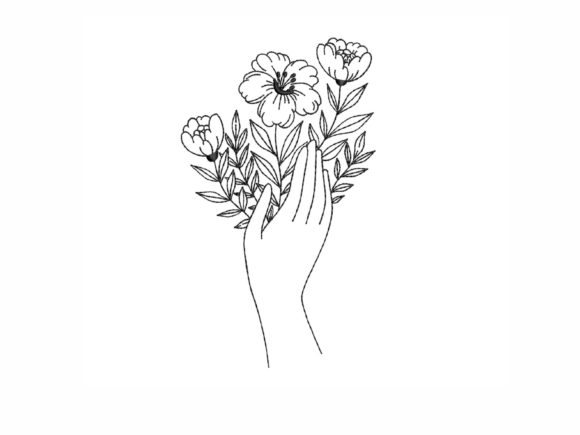
Floral Hands Embroidery Design Review
As an embroidery designer who has spent years translating digital concepts into tangible, stitched reality for small businesses, I look at every new file with a critical eye. It is not enough for a design to simply "look good" on a screen; it must perform under the needle, hold up to washing, and elevate the brand it adorns. Today, I am reviewing Floral Hands, a design categorized under Outline Flowers that promises to be cute, simple, and perfect for aesthetic projects. But does it have the professional weight needed for branded merchandise? Let us dive into how this design asset performs in real-world commercial applications.
First Impressions: Visual Personality and Brand Fit
The title "Floral Hands" immediately suggests a blend of nature and human touch. Based on the description, which highlights its simplicity and aesthetic appeal, my first impression is one of approachable elegance. This is not a heavy, ornate baroque design; rather, it feels modern, clean, and slightly rustic. For a small business owner—whether you run a boutique florist shop, a handmade candle brand, or a cozy café—this design strikes a balance between playful and professional.
The outline style is particularly noteworthy. In the world of machine embroidery, outlines can sometimes feel dated if the stitch density is too high or the lines are too thick. However, a well-executed outline flower pattern often conveys a sense of lightness and airiness. It feels like a stamp of authenticity, signaling that your product is handmade with care. This visual personality translates directly to customer trust. When a buyer sees a delicate floral hand motif on a tote bag or apron, they subconsciously associate the product with artisanal quality and attention to detail.
Real-World Business Applications
So, where does Floral Hands shine in a commercial setting? Because it is described as simple and versatile, it is incredibly adaptable across various product categories. Here is how I see this embroidered patch or logo performing on specific items:
- Staff Uniforms and Aprons: For a bakery or a local coffee shop, apron embroidery is a standard uniform requirement. A simple floral hand design on the chest pocket adds a personal touch without overwhelming the staff’s appearance. It reinforces brand identity while remaining functional and non-distracting.
- Tote Bags and Shopping Bags: Retailers love giving away branded bags. A tote bag design featuring Floral Hands serves as a walking advertisement. The outline style stitches quickly, keeping production costs down, yet the result looks premium. It pairs beautifully with natural fabrics like canvas or jute.
- Caps and Headwear: Cap embroidery requires designs that fit within a curved, limited space. If the design scales well, it can work perfectly on the front panel of a baseball cap or the side of a bucket hat. It gives a crafty, bohemian vibe that appeals to festival-goers and outdoor enthusiasts.
- Product Packaging Accents: Beyond apparel, this design can be used on hang tags, garment labels, or even as a seal on packaging boxes. It elevates the unboxing experience, making customers feel like they are receiving a gift.
- Etsy Branding and Digital Assets: For sellers on platforms like Etsy, having a consistent visual language is key. You can use this design on your shop banner, printable mockups, and social media graphics to create a cohesive brand identity. It helps your shop stand out in a crowded marketplace.
Strategic Placement and Careful Considerations
While Floral Hands is versatile, no design is universal. As a designer, I advise caution in certain areas to ensure the best finished product. Understanding the limitations of your embroidery file is crucial for maintaining professionalism.
Small Patch Sizes: If you plan to use this as a tiny label or a small accent on a sleeve, test the scaling carefully. Outline designs can lose definition if scaled down too much. Thin lines may merge together, creating a muddy blob rather than distinct petals or fingers. Always check the minimum recommended size before committing to bulk production.
Curved Surfaces: Embroidering on caps or rounded bags presents challenges. The fabric stretches and distorts during stitching. Ensure your digitizer has accounted for proper hooping techniques and stabilizer support to prevent puckering. If the design is too large for the curve, it will warp, ruining the aesthetic.
High Stitch Density and Texture: While the description suggests simplicity, always verify the actual stitch count. High-density fills can make garments stiff and uncomfortable, especially on t-shirts worn in warm weather. Conversely, if the design relies heavily on texture, it might get lost on coarse fabrics like heavy denim or rough burlap. Test on your target fabric type to ensure the thread colors pop against the background.
Dark Uniforms and Color Contrast: The effectiveness of an outline design depends heavily on contrast. On dark uniforms, you will need bright or metallic threads to make the white or light-colored outlines visible. If the contrast is low, the design will disappear, failing to communicate your brand message.
Impact on Brand Identity and Customer Engagement
In the handmade and small business sector, perception is everything. A well-executed embroidered detail signals quality. When a customer receives a product with a crisp, clean Floral Hands motif, it validates their purchase decision. It suggests that you care about the details, which fosters loyalty and encourages repeat business.
Furthermore, embroidery adds a tactile element to your products. Customers cannot touch online purchases, but when they receive the item, the raised texture of the stitches provides a sensory experience that print-on-demand cannot match. This physical connection enhances emotional engagement with your brand. It transforms a generic commodity into a unique, handmade product with character.
Practical Designer Notes for Production
Before you upload this digital embroidery file to your production machines, follow these essential steps to avoid costly mistakes:
- Test in Black and White: Print a black-and-white version of the design to check its composition and spacing. This helps you see if the negative space works effectively without being distracted by color.
- Check Hoop Size and Stability: Confirm that the design fits within your standard hoop sizes. If it is larger, you may need multiple hoops, which increases registration risk. Ensure you use the correct stabilizer (cut-away vs. tear-away) based on the fabric stretch.
- Thread Color Contrast: Select thread colors that complement your product. For a natural look, try earth tones or muted pastels. For a bold statement, go with high-contrast neons or blacks.
- Create a Printable Mockup: Before stitching dozens of units, create a printable mockup to show clients or stakeholders. This allows for approval on placement and scale before any fabric is cut.
- Confirm Commercial Licensing: Most importantly, verify that you have the right to use this design for commercial purposes. Check the license terms to ensure you are protected from copyright issues when selling your merchandise.
- Inspect Spacing and Density: Zoom in on the design file. Are there any overlapping stitches that could cause needle breaks? Is the spacing between elements balanced? A professional finish requires precise digitizing.
Floral Hands offers a charming, versatile option for small business owners looking to add a touch of elegance to their merchandise. By understanding its strengths and respecting its technical limitations, you can create high-quality custom apparel and accessories that truly represent your brand’s values. Remember, the goal is not just to embroider a design, but to stitch a reputation for quality and care into every product you sell.