Bunny with Flowers Embroidery Design Review
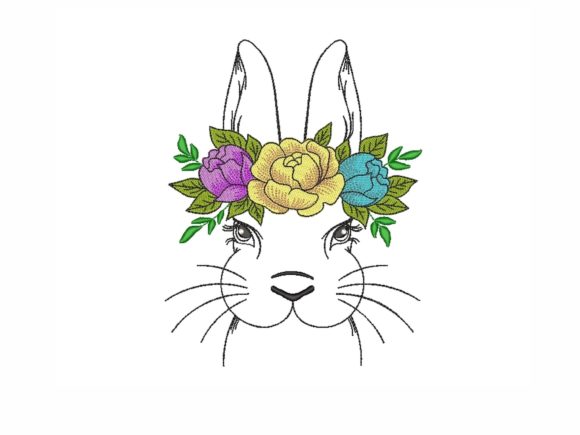
As an experienced embroidery designer, I spend a significant amount of time evaluating digital files before recommending them for commercial production. When a small business owner or Etsy seller asks if a specific design is viable for branded merchandise, they are looking for more than just aesthetic appeal; they need reliability, scalability, and brand alignment. Today, we are reviewing the Bunny with Flowers machine embroidery design. This file is marketed toward Easter projects, promising a result that is "fun and easy to stitch" while delivering an impressive finish. But does it hold up under the scrutiny of professional production standards? Can it serve as a viable asset for small business merch, custom apparel, or high-volume embroidered patches?
First Impressions: Visual Personality and Brand Fit
The title Bunny with Flowers suggests a design that balances playfulness with elegance. In the world of brand identity, few things strike a better balance between approachable and premium than floral motifs paired with soft animal imagery. From a designer’s perspective, this combination offers versatility. It feels handmade yet polished, making it suitable for a wide range of industries beyond just seasonal holiday marketing.
For a boutique bakery, this design could signal sweetness and care. For a florist or a creative studio, it suggests growth and natural beauty. The description notes that the design is "fun and easy to stitch," which often implies a moderate level of detail rather than overwhelming complexity. This is a crucial distinction for business owners. A design that is too intricate can become muddy when digitized for smaller sizes, whereas a clean, bold composition ensures clarity across different mediums. The visual personality here leans towards friendly and modern, avoiding the overly rustic or cluttered looks that can date quickly. It provides a solid foundation for visual consistency in a product line.
Real-World Business Applications
Let us look at how the Bunny with Flowers embroidery file performs in actual commercial scenarios. The primary use case for this design lies in its adaptability as a standalone logo accent or a central feature on various products.
- Embroidered Patches: One of the most profitable applications for this design is creating sew-on or iron-on patches. Small businesses often use patches to differentiate their products or as collectible items. The floral elements provide enough texture to make the patch visually interesting without requiring excessive thread colors, keeping production costs manageable.
- Apron Embroidery: For cafes, bakeries, or craft workshops, aprons are essential uniform pieces. Placing the bunny motif on the chest pocket or center bib adds a touch of personality to staff uniforms. It humanizes the brand and makes employees feel part of a creative community.
- Tote Bag Design: Canvas tote bags remain a staple for Etsy branding and event merch. The Bunny with Flowers design translates well to larger formats. On a tote bag, the details have room to breathe, allowing customers to appreciate the craftsmanship. It serves as a walking advertisement for the brand, especially when used by staff or given as customer gifts.
- Cap Embroidery: Structured caps offer a classic canvas for branding. If the design is scaled correctly, it can fit neatly on the front panel. However, curvature must be considered, as discussed below.
- Product Packaging Accents: Beyond apparel, this design can be stitched onto fabric tags attached to clothing lines, gift boxes, or handmade product labels. It elevates the unboxing experience, signaling to the buyer that attention to detail matters.
Strategic Considerations and Limitations
No design is perfect for every application. As a professional reviewer, I must highlight where the Bunny with Flowers design requires careful handling to avoid production errors.
Scale is the most critical factor. When reducing a complex design for a tiny patch size or a small cap logo, fine details can disappear or merge. If the floral outlines are too thin, they may not stitch cleanly at 2 inches or less. Always test the design at its intended final size before committing to bulk production.
Fabric texture also plays a significant role. On highly textured fabrics like heavy denim or bouclé wool, the definition of the bunny’s features might be lost. Conversely, on smooth cotton or polyester blends, the design will pop. Dark uniforms present another challenge; if the thread colors are light, ensure there is sufficient underlay stitching to prevent the base fabric from showing through. For dark garments, a stabilizer layer may be necessary to maintain crisp edges.
Additionally, consider the hoop size limitations. While the design itself may be scalable, your machine’s hoop constraints dictate the maximum dimensions you can stitch in one go. Large tote bags often require multiple hooping steps, which can introduce alignment issues if not planned carefully. Confirm the hoop size compatibility with your equipment before ordering materials.
Impact on Brand Identity and Customer Trust
In the competitive landscape of handmade products and commercial embroidery, perception is reality. Using a high-quality, well-executed design like Bunny with Flowers directly influences customer trust. When a customer sees a clean, professional stitch job, they subconsciously associate that quality with the durability and value of the entire product.
A sloppy embroidery job can undermine even the best product concept. By choosing a design that is "easy to stitch" but still impressive, you reduce the risk of technical failures during production. This reliability fosters repeat business. Furthermore, the playful yet elegant nature of the design helps build a connection with the audience. It suggests that your brand cares about aesthetics and joy, which enhances buyer engagement. Whether used for Easter promotions or year-round spring collections, the design reinforces a positive emotional response.
Practical Designer Notes for Production
Before integrating this digital embroidery file into your workflow, follow these essential steps to ensure success:
- Test in Black and White: Convert the design to monochrome to check contrast and spacing. If the design relies solely on color variation to distinguish elements, it may fail in single-color applications.
- Check Stitch Density: Review the density settings. Too much thread in a small area can cause puckering, especially on lightweight fabrics. Ensure the design is balanced for the target material.
- Thread Color Contrast: Evaluate the recommended thread colors against your actual fabric. High contrast generally yields better readability, but subtle tones can create a premium, muted look if executed precisely.
- Stabilizer Selection: Use the appropriate stabilizer (cut-away vs. tear-away) based on the fabric type. For stretchy knaps or heavy towels, a cut-away stabilizer is usually required to prevent distortion over time.
- Create a Printable Mockup: Before stitching the first physical sample, generate a printable mockup or digital rendering. This allows you to visualize the design on the final product and share it with clients for approval.
- Confirm Commercial Licensing: Most importantly, verify the licensing terms. Ensure you have the right to use the Bunny with Flowers design for commercial purposes, including selling finished goods. Never assume rights are granted unless explicitly stated in the product documentation.
In conclusion, the Bunny with Flowers design offers a compelling option for businesses seeking to add a touch of charm and professionalism to their merchandise. Its balance of simplicity and visual appeal makes it adaptable for various applications, from staff uniforms to customer-facing packaging. By paying close attention to scale, fabric choice, and production techniques, you can leverage this design to enhance your brand’s value and connect with your audience effectively. Always remember that successful embroidery is as much about technical precision as it is about creative vision.